Poor separation of polar compounds?

ZIC®-HILIC solves your problem.


From small peptides to ions, from complex carbohydrates to metabolites -
all types of hydrophilic analytes can be separated with ZIC®-HILIC HPLC.
In addition the LC/MS sensitivity is higher and the sample work-up simpler.


Welcome to SeQuant, where innovative products for separation and purification are developed. We take pride in delivering high quality products and advanced technical support to customers world wide.


How can we help you today?

- I need a separation method for...

- Can I improve my IC-detection?

- What is HILIC?

- My HILIC peaks look weird!

- Which column should I choose?


5th International HILIC Day May 2

Umeå University in Sweden is hosting a seminar day on HILIC with well-known international speakers. Learn from scientists like Dr. Andrew Alpert, Prof. David McCalley, Prof. Knut Irgum and Prof. Tyge Greibrokk.


HILIC Day UK 2013 June 27

Whether you are new to HILIC or very experienced, HILIC Day is where to boost your skills in HPLC of polar hydrophilic molecules. Join scientists from industry and academia for a full day of seminars in Manchester.


Detection of Food Adulteration

United States Food and Drug Administration (US FDA) has developed a liquid chromatography-tandem mass spectrometry method for the detection of economically motivated adulteration in protein-containing foods.


New Chromolith® High Resolution

Ultra high resolution without ultra high pressure. Faster analysis and higher resolution on your standard HPLC. Chromolith® monolithic HPLC columns from Merck Millipore avoid restrictions from particles and frits.


New Product Line

ZIC®-cHILIC

Complementary selectivity column for polar hydrophilic compounds.


Technology Tutorial

What is HILIC?

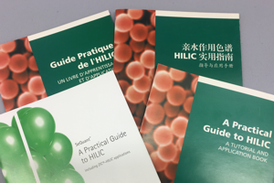
Learn online or
request the booklet
A Practical Guide
to HILIC

A Practical Guide to HILIC


Application Tool

Will HILIC separate your molecules?

Use your molecular structure to calculate retention online.

HILIC retention prediction model